
Asian Cricket
One Sentence That Exposes Pakistan Cricket's Selection Fault Line
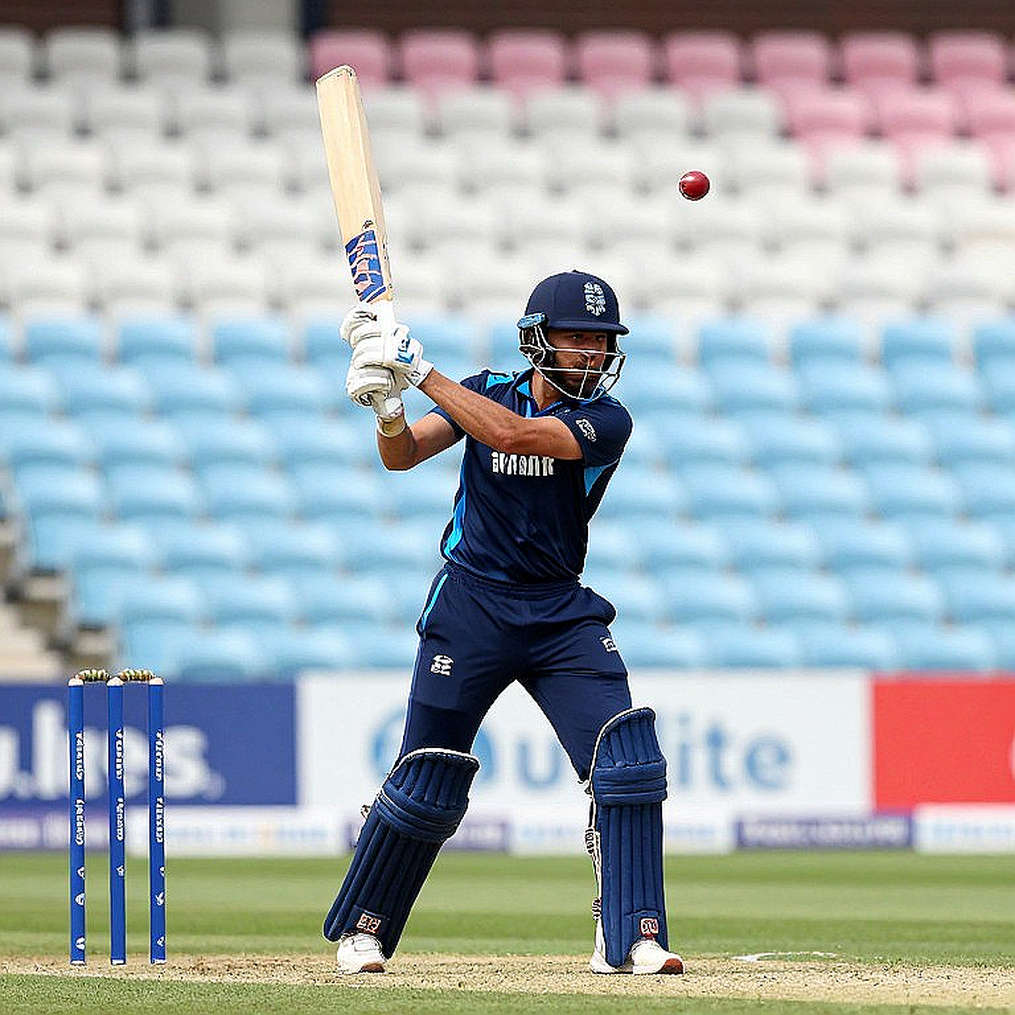
सलमान अली आगा ने वनडे त्रिकोणीय सीरीज़ के फाइनल की पूर्व संध्या पर कहा कि सीरीज़ के बीच में खिलाड़ियों को बदलना अच्छा नहीं है और ऐसा दोबारा नहीं होना चाहिए। वह खुद उन सात खिलाड़ियों में थे जिन्हें तीन टेस्ट हार के बाद बीच सीरीज़ में बाहर किया गया था, फिर घरेलू क्रिकेट में तिहरा शतक लगाकर श्रीलंका के ख़िलाफ़ टेस्ट टीम में लौटे। महत्वपूर्ण बात यह है कि उन्होंने चयन के फ़ैसले पर नहीं, बदलाव के समय और प्रक्रिया पर सवाल उठाया—और अपनी वापसी को "सिस्टम की जीत" के रूप में स्वीकार करने से इनकार कर दिया। रिपोर्ट में पीसीबी, बाबर आज़म या बाकी छह बाहर किए गए खिलाड़ियों का कोई बयान नहीं है, जिससे यह एकल-स्रोत कहानी बन जाती है।
Lahore. At the press conference in Gaddafi Stadium, Salman Ali Agha filed no complaint. He named no one. He did not even mention that he had been dropped. He simply said that changing a team mid-series is not a good thing, and that he hopes it does not happen again. That sentence came from the man who had been removed in that very change. So reading it as one player's remark would be a mistake. It is a statement that places a direct question mark over the process of Pakistan cricket's selection machinery—but in extraordinarily measured language.
Pakistan's Test journey produced three different faces across three matches. In the first Test, Babar Azam was unavailable through injury and Agha carried the captaincy. The result: a defeat by an innings and 103 runs. In the second Test Babar returned, and the team lost again, this time by 194 runs. The third was lost by eight wickets. After three straight defeats, the selection committee cleared out seven players mid-series—and Agha was among those seven. In other words, Agha is not a witness to this sequence; he is one of its casualties. That is what changes the weight of his remarks.
Then came the familiar cycle of Pakistan's domestic cricket. Agha returned to domestic cricket, played the President's Trophy Grade-1, struck a triple century and a hundred, and was called back into the squad for the Test series against Sri Lanka. This is an extremely convenient story for the management—"look how the system works". Agha refused to accept that story. He used the same experience in reverse, to argue that the decision had been harmful. This is the most telling signal in the entire report, and it is placed there not with commentary but simply through the order in which things appear.
The whole sequence comes together when you look at when and where Agha said this. The occasion was the eve of the ODI tri-series final, at Gaddafi Stadium, against Sri Lanka. Three things coincided. First, the media spotlight was guaranteed a day before a final. Second, the opponent was the very team Pakistan face in the next Test series, so the conversation could move naturally towards the Test side. Third, Agha's status had changed—from a discarded player to a returning one. He would rarely get a more favourable platform. This was a calculated moment, not an off-the-cuff answer.
His statement can be read in three layers. The first layer is the safest—player welfare. Mid-series changes damage players' confidence. It is an argument that needs no documentation to prove and that nobody can directly deny.
The second layer is about process, not the decision itself. Agha never said those seven players should not have been dropped. He did not question the selection criteria. His entire attack was narrowed to a single variable—timing. The phrase "mid-series" appears twice in his answers. This is the recognisable language of a senior player: a clear position, but no frontal collision with the management.
The third layer is the most important, and it is the one never stated in plain words. Had Agha wanted, he could have turned his whole journey into a "system success" story. Dropped, scored runs in domestic cricket, came back, earned a place. That is precisely the narrative the management repeats. Agha did not accept it. He used his own example to argue that the decision had been wrong. In that single move, the direction of the entire argument flips.
Now to the workload argument he built. The journalist's question was about process: were players consulted before being rested? Agha's answer was about substance: is there really that much workload? These are two different questions. And the first was one he was best placed to answer, because he himself had been removed mid-series. He left that question alone.
His argument ran: three formats, three separate teams, so the workload question is no longer what it was when one team played everything. There are two problems with this. First, he is the clearest counter-example to his own claim. In the same window he featured in the domestic first-class tournament, the Test side against Sri Lanka, and the ODI tri-series. Multi-format overlap did not disappear; the number of people overlapping merely shrank. Second, "separate teams" does not mean "a workload management mechanism". Three teams reduce average load, but they do not solve individual peak load or the consultation process. In his answer, Agha ended up defending the very system he had just challenged.
There is also a note of nostalgia in his remarks—the comparison with the time when there was only one team. That comparison foregrounds structural improvement and obscures procedural gaps. It is not misinformation, but it is incomplete.
The report's biggest weakness is its sourcing. Apart from Agha, nobody is named. No PCB response, no Babar statement, nothing from the coaching staff, and complete silence from the other six dropped players. The scores of all three matches are given, but no scorecard or official record is cited. The dateline says Lahore, but there is no named reporter and no news organisation. For a report containing direct quotes, this is a serious flaw.
And one thing needs to be read with care. One of Agha's answers refers to "dropping the series", when the context is plainly about changing players mid-series. This is either loose spoken expression or meaning distorted in translation and editing. That same sentence also carries the core sentiment of the whole statement. It should therefore be taken as a sense, not as a word-for-word quotation.
The report's tone is neutral, but its construction is not. First three defeats, then the clearing out of seven players, then the warning from the man who was dropped—"I hope it does not happen again". The reader's conclusion forms on its own. This is not journalism that takes sides openly; it is journalism built through sequencing.
Now what to watch. Two Tests against Sri Lanka. If Agha scores runs, the management will present his return as a vindication of the system—even though he himself has questioned that system's process. That will be a direct collision. If he does not score, the debate over mid-series changes will return by another route. The PCB has stayed silent so far, and in a debate like this, silence is also a position. The biggest question rests with Babar Azam—the one central figure in this story who has said nothing yet. He is the captain, he returned from injury, and the team still lost after his return.
What Agha said was not the venting of an aggrieved player. It was a limited, deliberately calibrated statement kept firmly within the bounds of process. The risk is that in cricket such statements are often buried under the label of "emotional player". But when seven players are removed mid-series and not one of them feels entitled to say that as a player he should have been asked—then the problem is not anyone's feelings. It is the procedure of the system. Agha pointed at that procedure, and he did it not in the loudest way, but in the most durable way.
संबंधित खिलाड़ी