
होमAsian CricketAfridi's Five Sixes Flip the Script: Pakistan Beat India by Four Wickets at Hong Kong Sixes
Asian Cricket
Afridi's Five Sixes Flip the Script: Pakistan Beat India by Four Wickets at Hong Kong Sixes
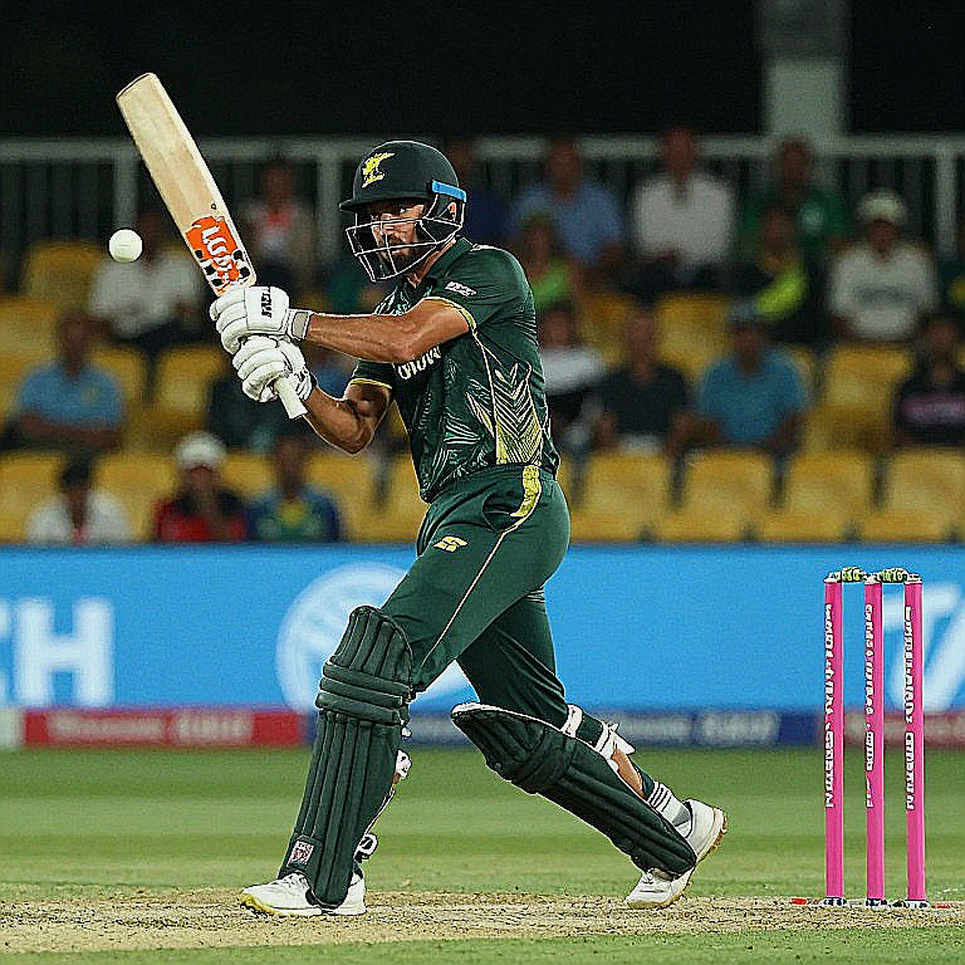
हांगकांग सिक्सेज 2026 के ग्रुप C मुकाबले में पाकिस्तान ने भारत को चार विकेट से हराया। भारत ने छह ओवर में 88 रन बनाए, पाकिस्तान ने 89 का लक्ष्य चार विकेट पर हासिल किया — गणना के अनुसार लगभग दो ओवर शेष रहते। मैच का निर्णायक क्षण पाकिस्तानी पारी का पहला ओवर रहा, जिसमें अफरीदी ने क्रुणाल पांड्या की गेंदबाज़ी पर लगातार पांच छक्के जड़कर 31 रन बटोरे; दूसरे ओवर में नटराजन पर 28 रन और बने। अफरीदी 35 (8 गेंद), नफ़ाय 40 (11 गेंद) पर आउट हुए और नियाज़ी ने पहली गेंद पर छक्का जड़कर मैच समाप्त किया। भारत की पारी में तेवतिया और क्रुणाल पहली गेंद पर शून्य पर लौटे, जबकि नटराजन अंत तक नाबाद रहे — यानी छह बल्लेबाज़ों वाले फॉर्मेट में भारत के पास निचला क्रम नहीं था। मैदान: मिशन रोड ग्राउंड, मोंग कोक (छोटी बाउंड्री); दोनों पारियों में कुल 11 छक्के। ज़रूरी संदर्भ: यह T20/वनडे/टेस्ट नहीं, बल्कि छह-खिलाड़ी, छह-ओवर का प्रदर्शनी फॉर्मेट है, इसलिए इन आंकड़ों को T20I मानकों से तुलना नहीं की जानी चाहिए। पिच, मौसम या डकवर्थ-लुईस की जानकारी उपलब्ध नहीं।
Mong Kok: Pakistan beat India by four wickets in the Group C fixture of the Hong Kong Sixes 2026 at Mission Road Ground. India, batting first, made 88 in their six overs; Pakistan chased down the 89-run target with four wickets down. Ball-by-ball arithmetic suggests the chase was completed with roughly two overs to spare. The decisive passage was the first over of Pakistan's innings, in which opener Afridi struck five consecutive sixes to plunder 31 runs and turn a defendable 88 into an almost impossible defence in a six-over format.
A fundamental caveat first, and it applies to everything below: this was not a T20 International, an ODI or a Test. The Hong Kong Sixes is an invitational exhibition format with six players per side and six overs per innings; the fall of the fifth wicket effectively ends an innings. Numbers like 88 in six overs, 40 off 11 balls and 35 off 8 balls are structurally non-comparable to T20I benchmarks. Using them to judge a player's international T20 pedigree or a national side's strength is the single biggest analytical error available here. Every conclusion in this report is constrained accordingly.
India's innings was shaped by its start. Krunal Pandya and Tewatia both fell first ball. Losing two batters for nought in a six-a-side game breaks the spine of an innings. India still reached 88 — a big total in this format — but carried a structural weakness with them: a specialist bowler in Natarajan was left unbeaten at the end, meaning there was no lower-order buffer to cash in during the closing overs. With only six batters available, that risk is inherent, and it told.
Then the turning point. Chasing 89, Afridi hit five successive sixes in the opening over, taking 31 off it. In a six-over innings, one over is 16.7 per cent of the bowling resource; conceding 31 is roughly 35 per cent of the target. Pakistan had effectively completed a third of the chase inside six deliveries, and they took it off India's most experienced frontline bowler, Krunal Pandya. Experience does not function in this format the way it does in T20: one bad over here is not a phase, it is the match.
Pakistan did not ease off in the second over either. Another 28 runs took them past 50 inside 12 legal deliveries — 59 runs in two overs, or 66 per cent of the target in 12 balls. That second over belonged to India's other senior bowler, Natarajan. Between them, India's two most experienced bowlers conceded 59, and in this format there is no way back from that kind of leakage.
Pakistan's innings was not entirely one-way, though. Afridi fell for 35 off eight balls and Nafay for 40 off 11. Both strike rates were extraordinary even by this format's standards, but both dismissals gave India a route back. Samad departed for three, meaning Pakistan lost two wickets in pursuit of a small target. Niazi finished it with a six off his first ball. That ending says something about process: Pakistan never looked like losing, but this was not a controlled chase either.
The venue played its part. Mission Road Ground in Mong Kok is a small, community-scale ground with short boundaries, not a full international venue. Short boundaries materially inflate six-hitting, and the 11 sixes across both innings are partly a venue artefact rather than pure batting strength. No pitch report, weather, dew or DLS information is available, so environmental factors cannot be assessed. It is also not stated whether the match was played by day or under lights.
The first analytical conclusion is that the format, not the teams, produced the scoring pattern. 88 in six overs — about 14.7 runs per over — and a chase completed at roughly 22 runs per over are only coherent inside a six-a-side, short-boundary context. Any read-across to T20I scoring norms is invalid.
Second, the match was lost and won in a single six-ball window. Krunal Pandya's opening over converted a defendable 88 into a near-impossible defence in a format where only six overs exist. One over is 16.7 per cent of the bowling resource; conceding 31 is 35 per cent of the target.
Third, India's collapse was structural, not merely a run-rate issue. First-ball ducks for Tewatia and Krunal, plus a specialist bowler left unbeaten at the end, point to an innings with no lower-order buffer — an inherent risk when only six batters are available, and one India failed to manage.
Fourth, result and process must be read separately. A four-wicket margin flatters Pakistan's control. They lost two wickets in a small chase and only sealed the match with a first-ball six. The outcome was never seriously in doubt, but the process was not a controlled chase.
In Group C terms, the win matters: the camp framing it as a 'bounce back' and as keeping qualification hopes alive implies Pakistan lost their opening fixture, though that cannot be independently confirmed here. For India, the defeat adds pressure, but the defining feature of this format is that one good over can change a tournament and one bad over can end it.
The lessons are clear. India must rethink how they allocate bowling resources — handing the first over to the most experienced bowler is not automatically correct when the opposing opener is in an aggressive mood. Pakistan must learn that sustaining composure after an explosive start matters just as much, because two or three quick wickets while chasing a bigger target can hand the match back. And above all: do not weigh any of these numbers on a T20 scale. This is six-over cricket, where risk, reward and failure all arrive three times faster.
संबंधित खिलाड़ी