
होमKabaddiKabaddi: From the Clay Arena to the Mat — India's Indigenous Sport Reinvents Its Game and Its Grammar
Kabaddi
Kabaddi: From the Clay Arena to the Mat — India's Indigenous Sport Reinvents Its Game and Its Grammar
कबड्डी भारत का पारंपरिक संपर्क खेल है जिसमें सात खिलाड़ियों की दो टीमें होती हैं। एक रेडर विपक्षी आधे हिस्से में जाकर लगातार 'कबड्डी' बोलते हुए किसी डिफेंडर को छूकर लौटता है; टच पर अंक मिलता है और पकड़े जाने पर रेडर आउट होता है। पुरुषों का मैट लगभग 13×10 मीटर और महिलाओं का 12×8 मीटर होता है। आधुनिक युग में मिट्टी के मैदान की जगह मैट, वैज्ञानिक प्रशिक्षण, डेटा विश्लेषण और टेलीविज़न प्रसारण ने खेल को तेज़ और पेशेवर बनाया है, जबकि मुख्य चुनौतियाँ स्थायी कैलेंडर, खिलाड़ियों की आर्थिक सुरक्षा, निर्णयों की सटीकता और अंतरराष्ट्रीय विस्तार हैं।
In Indian villages, the first game to begin as the light faded was almost always kabaddi. No ball, no bat, no wickets — just a chalked line, two teams, and one word that could not be spoken without holding your breath. That simplicity is kabaddi's greatest strength: wherever there is ground to play on, the sport can begin. Yet over the past couple of decades the game has been thoroughly remade. Clay has given way to the mat, bare feet to taped ankles, and the neighbourhood audience to viewers counted across television and streaming platforms.
This is not merely cosmetic. When a sport's stage changes, so do its speed, its injury profile, its coaching methods and — above all — the arithmetic that makes and breaks a player's career. Kabaddi stands at a turning point: will it remain a popular tournament, or become a professional sport with a fixed calendar, a scientific support system and a genuine global footprint?
A small field, high stakes
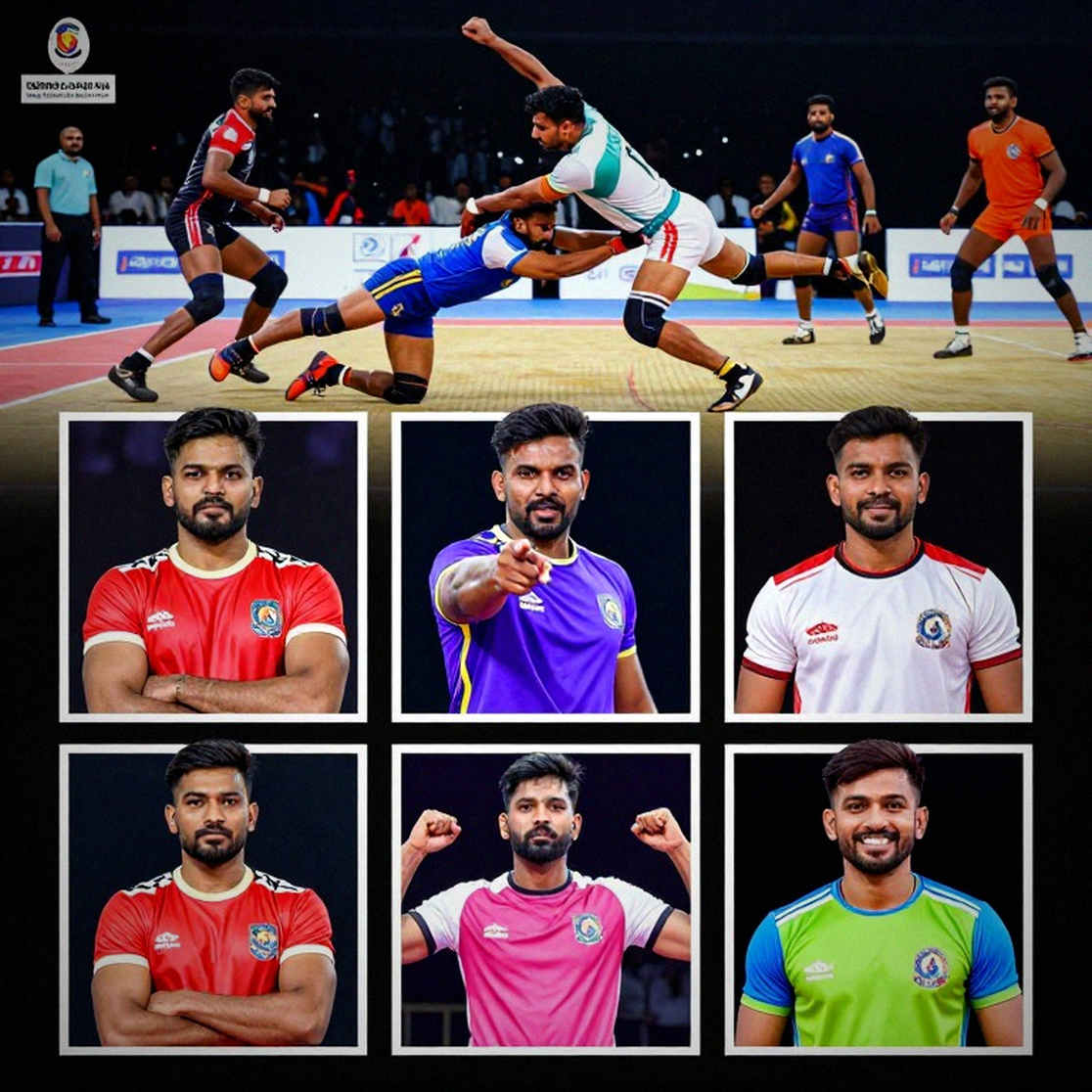
The rules are simple to recite and hard to execute. A raider crosses into the opposition half, chanting "kabaddi-kabaddi" fast enough that the need to breathe is never felt, must touch a defender and return. Return without a touch and a point goes to the opposing side; get caught and the raider is out. Since the playing area is so compact — roughly thirteen by ten metres for men and twelve by eight for women — a single misstep can change an entire raid. The raider has three to four seconds to decide which defender is high, who is covering, whose ankle is exposed, and who lunges too early. It is a game of fast chess and faster feet.
Because of this, kabaddi is sometimes called "chess in which you sweat." Seven players take the field with three to five substitutes available. The substitution rule allows players to be swapped one at a time, and the timing of those swaps becomes a signature of coaching. Substitute too early and the bench weakens; substitute too late and tired legs get caught.
New surface, new game
The difference between clay and mat is not just the surface. On clay the foot sinks slightly and grip is high, which slows direction changes. On the mat, footwork is quicker and changes of direction cheaper, so the raider's reach effectively grows — and so does the defender's speed to close. The result is a sport that is not more violent, but far faster.
The injury profile has shifted accordingly. On clay, injuries were mostly abrasions, sprains and twisted ankles. On the mat, low friction loads the knee ligaments, hip joint and shoulder. When a raider drops to a knee to escape, or an ankle-holder stops a raider with the full mass of his body, the nature of the impact is very different. Strength and conditioning coaches, physiotherapists and recovery protocols are no longer luxuries.
Television added something else: visibility. A match played at night under floodlights, in front of high-speed cameras, records every small error. A wrong tackle that once caused an argument in a neighbourhood is now replayed in slow motion, and every viewer forms an opinion.
The science of raiding
Raiding is the sport's most visible and most deceptive skill. A good raider decides which defender to attack within the first thirty seconds. He walks in, watches the defender's eyes, and lies with his body. The foot goes one way, the shoulder or hand signals another.
A raider has three broad options: the touch, the bonus touch behind a designated line in the opposition half, and the deliberate empty raid when the defence has fully vacated its position. But the most valuable skill in modern kabaddi is how fast a raider returns across the midline; a slow return invites the defence to pounce. Breath control matters too — a player who cannot hold rhythm while chanting begins to labour, which is why many raiders chant in a musical cadence.
At the elite level, raiding becomes an identity. Some raiders are known for reach and leg length, others for quick feet. One hunts the ankle-holder's weakness, another attacks a covering defender's delay. Teams now review a raider's old matches to learn which way he goes under pressure.
The balance of defence
Defence is the least celebrated and most decisive part of kabaddi. No team wins a tournament with a weak defence. The main roles are ankle-holder, cover and corner. The ankle-holder stands at the front, takes risk and collects the most tackle points. Covers flank him to catch a raider who touches and runs. Corners close the exits near the boundary.
Good defensive teams do not rush out of panic. When four defenders lunge together they open up, giving the raider two touches. Experienced teams entice the raider, change his direction, then close in. The skill involved is the feint — a defender steps forward and pulls back, making the raider believe a lane is open.
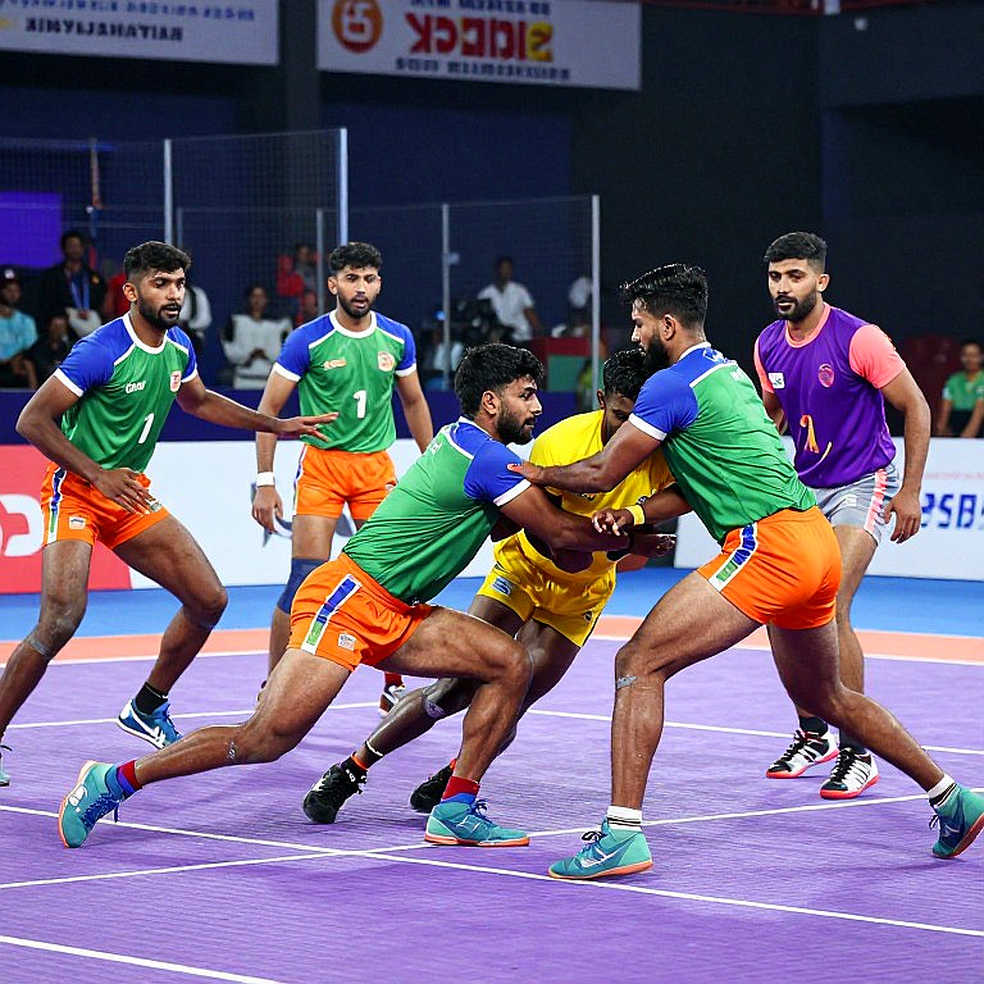
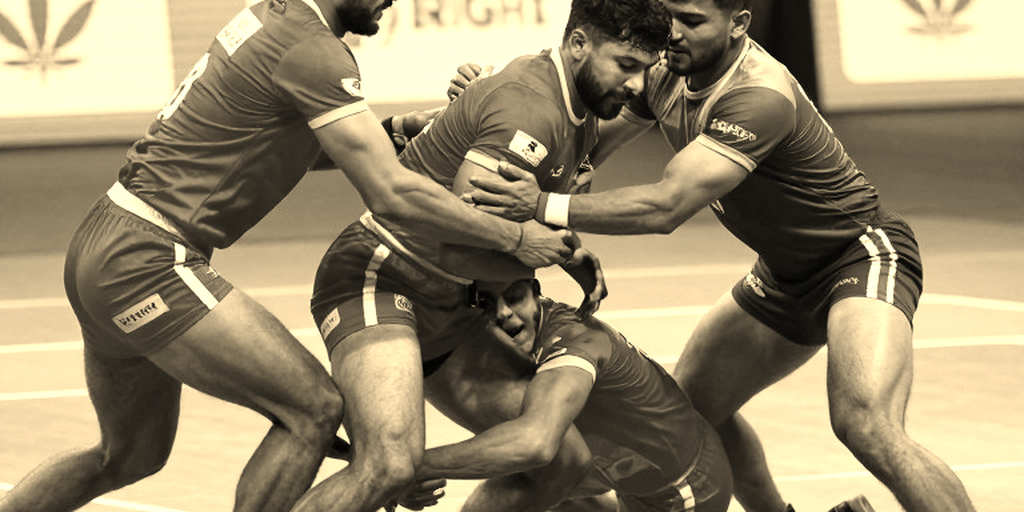
The hardest part of defence comes after the tackle. Once the raider is caught, defenders must cluster within seconds so he cannot escape. If a single defender releases an ankle, the whole effort is wasted. That is why teams drill the cluster: three or four players learning to grip and lift on a verbal cue.
A new fitness arithmetic
Warm-ups matter now in a way they did not two decades ago. Kabaddi loads every joint, but upper and lower body coordination matters most. A raider needs the strength to reach the second line and turn; an ankle-holder needs the courage to stop a raider carrying close to a hundred kilos. It is a blend of muscular strength, endurance and balance.
Modern training has three visible tiers: basic strength and mobility for knees, hips and shoulders; sport-specific drills such as rope running, ladder work and reaction drills; and recovery and mental preparation. The most overlooked factor is that matches are packed tightly, so players must also be trained to recover quickly from knocks.
One peculiar physical demand is chanting while holding breath, which couples lung capacity with throat control. Senior coaches drill players to hold rhythm even while running. A player short on fitness starts gasping by the third or fourth raid, and accuracy falls away.
Building a team
With seven on the mat and a few on the bench, balance matters more than raw talent. A "complete" side typically carries two lead raiders, two support raiders, two ankle-holders, two covers and a corner or two. The real challenge is that the bench must be of the same standard, because an out forces an immediate replacement.
Selection has changed accordingly. Once the eye decided that "this boy is quick." Now teams read data at trials: raid success rate, average points per raid, tackle success rate, and the team's scoring swing when a player is off the mat. This does not replace the eye; it informs it.
Another element of balance is hiding a weak link. Every squad has players who raid well but defend averagely, and vice versa. The coach's art is placing the weaker link where the pressure is lowest — an average defender at corner, or a weaker raider given bonus duties so he avoids risk.
Women's kabaddi: a game within the game
Women's kabaddi has fought a different battle. The issue was never skill; it was platform. Once girls from villages and small towns had a route to play, it became clear that kabaddi's physical demands do not ask about gender — decision speed, balance and courage are required, and they exist in any athlete.
A distinct technical character has emerged. With a smaller mat, raid distances are shorter and the defence has less time, so the game becomes quicker. Many women raiders locate their strength in rapid decision-making, and fast-footed ankle-holders gain importance.
The social dimension matters too. Many families still hesitate to treat sport as a career. But when women's matches are televised and players become recognisable, that hesitation weakens. What is still needed is equal matches, equal broadcast and equal financial security, because the talent already exists.
Grassroots: where players come from
Kabaddi's biggest supply line remains villages and small towns. In parts of Haryana, Uttar Pradesh, Maharashtra, Tamil Nadu, Karnataka and Punjab, evening kabaddi on a clay ground is a social event where spectators act as referees and players coach themselves. This informal structure supplies the raw material that professional teams polish.
But the gap between grassroots and professional is still wide. Villages have talent but not scientific training, nutrition or injury management. Players often load their bodies heavily by sixteen or eighteen and suffer joint problems later. Guidance at the right age decides the length of a career.
One route is district-level academies offering free training and medical support to school and college players. Another is treating kabaddi in the school curriculum as seriously as football or cricket. Until the village ground connects to the professional one, talent identification remains half-done.
Broadcast, data and a new audience
Television brought a sport once treated as a fairground into the living room. The first effect was linguistic: kabaddi vocabulary now sits on the tongue of viewers who have never played. "Tackle," "bonus," "do-or-die," "super raid" travel from commentary into homes and remove the biggest barrier to understanding.
The second effect is data. Every raid, tackle and out is recorded, letting coaches see which player's performance drops under pressure. But data has a trap: a player's numbers can look good because he faced weak teams. Analysts who decide on averages alone often err; good analysis includes context.
The third effect is viewing habit. A kabaddi match runs about an hour or a little more, attractive to viewers tired of longer formats. Night slots and short social clips have brought new audiences. The question is whether that audience stays or merely watches clips and leaves.
Challenges that remain
The biggest is continuity. A short season followed by a long gap costs players competitive rhythm and costs the sport its conversation. Kabaddi needs a year-round calendar — league, domestic championship, inter-state tournaments and international fixtures on fixed dates.
The second is financial security. If income stops with an injury and there is no social protection, no player can commit a life to the sport. Professional sport means insurance, pensions, rehabilitation and post-career pathways, not just stadiums and fixtures. Many players remain outside the system, especially those who never progress from state to national level.
The third is fair play and disputes. Kabaddi decisions rest heavily on referee judgement: did the raider cross the line, did the tackle land, did the player breathe. When the margin is two points, such a call can flip a match. Investment in technology, video review and referee training is essential.
The fourth is geographic expansion. Kabaddi exists outside India but lacks depth. Until players in other countries have leagues, domestic structures and training centres at home, an international calendar will not build itself.
The road ahead
Kabaddi's greatest inheritance is that it belongs to no single country, language or class. Its rules fit in four lines, yet mastery takes years. That contradiction is what makes it special — easy to learn, hard to master.
The way forward rests on three things: a clear calendar that players and viewers can trust; a connected ladder from grassroots to professional level where talent gets not only a chance but a support system; and putting player safety and dignity first.
When a viewer watches fifty decisions change in thirty seconds on the mat, they are not only watching a sport — they are watching a long journey that began in a clay arena. Kabaddi's real victory is not how many sponsors it attracts, but that it has not lost the smell of its own soil.
संबंधित खिलाड़ी