
Jemimah Rodrigues's Comeback: After the Hamstring, a Three-Front Test of Fitness, Form and a Place in the XI
जेमिमा रोड्रिग्स दाहिनी हैमस्ट्रिंग की हाई-ग्रेड चोट से उबर रही हैं, जो 3 अगस्त को कार्डिफ़ में द हंड्रेड के दौरान सदर्न ब्रेव के लिए खेलते समय लगी थी। निदान BCCI की मेडिकल टीम ने किया। इस चोट के कारण वे महिला टी20 एशिया कप (UAE), एशियाई खेल और ज़िम्बाब्वे के खिलाफ़ घरेलू सीरीज़ से बाहर रहीं, जबकि भारत ने इन सभी आयोजनों में जीत दर्ज की — जिससे टीम की गहराई साबित हुई। रिपोर्ट में वापसी की कोई तारीख़ या लक्षित टूर्नामेंट नहीं बताया गया, इसलिए 'वापसी की तैयारी' को पूर्ण फिटनेस न मानें। मुख्य जोखिम पुनः चोट (हैमस्ट्रिंग रीकरेंस) और मैच-शार्पनेस की कमी है। वापसी का फ़ैसला फॉर्मेट-विशिष्ट होगा: टी20 के लिए मंज़ूरी वनडे तैयारी प्रमाणित नहीं करती।
In one sentence
Jemimah Rodrigues, sidelined by a high-grade right hamstring tear sustained in The Hundred, is eyeing a return. But the real question is not when she comes back — it is how fitness, match-sharpness and a place in a settled XI get managed at the same time.
What happened
The ICC report states that the India batter is eyeing a return after a lengthy injury layoff. The injury details are concrete: a high-grade tear of the right hamstring, picked up while playing for Southern Brave in The Hundred in England, at Cardiff (Sophia Gardens), on 3 August. The BCCI medical team diagnosed the injury — a significant detail, because the injury was suffered in an overseas franchise league but its management passed to the national board.
This is not a match report. There is no innings score, no ball-by-ball detail, no batting average or strike rate, no return date and no named target tournament. The only hard data point in the source is medical: the severity and classification of the injury. Everything else is context and inference, and should be treated as such.
Understanding a high-grade hamstring tear
Muscle strains are conventionally graded. Grade 1 involves a few fibres and a short absence; grade 2 is a partial tear needing weeks of controlled loading; grade 3 — high-grade — involves substantial fibre damage, can require months of tissue healing, and carries the highest recurrence risk.
The practical implication is that the 'lengthy layoff' described in the report was not a short gap. When one injury costs a player a continental tournament, a multi-sport medal event and a bilateral series, the absence is measured in months. It also matters that this is a soft-tissue, muscular injury rather than joint or contact trauma. Pitch surface, weather, dew and venue type are not plausible causal factors. Any suggestion that the Cardiff surface or conditions caused it would be technically wrong: the driver is load management and muscle fatigue.
The congested calendar is the real fuel
Early August is peak franchise-window density in England. The Hundred compresses matches into near-daily frequency with constant travel. That is precisely when hamstrings come under maximum strain. The report does not specify the exact moment of injury, but the context suggests it occurred inside a heavy match block — an inference offered with medium confidence, not as fact.
The Hundred's 100-ball format is closest to T20 in physical demand: explosive short sprints, quick singles, outfield bursts. Women's franchise leagues are now the biggest stage for internationals, and they sit outside central-contract medical oversight. That tension is the heart of this story.
What she missed
Three separate windows, per the report: the Women's T20 Asia Cup hosted in the UAE (an ACC tournament); the Asian Games, a multi-sport continental event at which cricket was a medal sport and where India won gold; and a home bilateral series against Zimbabwe, described as recently concluded, which India swept 3-0 in both ODIs and T20Is.
A factual caution is warranted. The source places the Asia Cup (UAE) and the Asian Games alongside each other, and some details in the original text merit cross-checking against ICC, ACC and OCA records rather than being accepted at face value. This report flags those elements rather than smoothing them over.
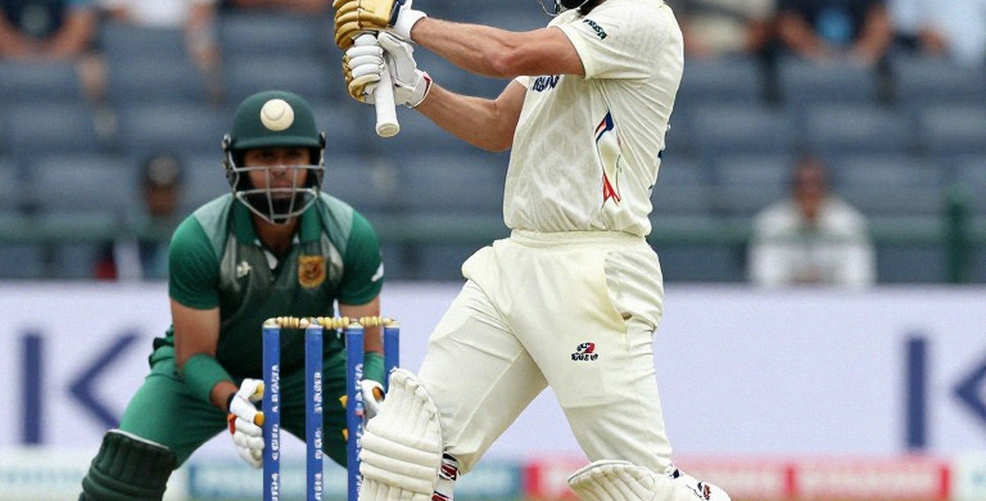
Three separate windows also means the absence stretched across a multi-event block — and that is where the distinction between fitness and match-sharpness becomes decisive.
What India won without her
All four team outcomes mentioned went India's way — Asia Cup, Asian Games gold, 3-0 in ODIs, 3-0 in T20Is — without the player.
But there is an analytical trap here. 'Won without her' does not mean 'she was not needed'. The quality of opposition at the Asia Cup and the Asian Games is not detailed in the report, and the only bilateral opponent named, Zimbabwe, is not a peer-level side. The clean sweeps therefore carry limited informational weight about strength. This is a result signal that does not inform process.
What is genuinely meaningful is the consistency of the results across home, neutral (UAE) and multi-sport environments. Winning titles without a frontline batter points to a resilient batting unit and a functioning pipeline — a medium-confidence read, because the depth claim cannot be pressed hard without checking opponent quality.
Selection pressure, not controversy
The returning player does not walk back into an automatic spot. The team has won without her, the order has settled, and those who performed in her absence will not simply step aside. That is not a controversy; it is ordinary professional competition. But it does make the comeback technically harder.
There is also a behavioural pattern worth noting: sides that win titles in a player's absence typically do not rush that player back. Selectors have reason to prefer proven fitness over reputation. That does not mean they do not want her — it means the decision will rest on medical clearance and practice-match evidence.
Franchise versus country
Read broadly, this is a case study in the growing women's franchise economy. An Indian international suffered a serious injury in an overseas league and consequently missed national-team events. Structurally, playing an overseas league borrows against national-team availability: the player gains visibility, experience and income; the board carries the risk.
No NOC, insurance or compensation detail is present in the report, so any claim there would be speculation. What can be said is that the BCCI medical team did the diagnosing, which signals that return timing sits with the board rather than the franchise. That is a meaningful governance signal, because it reduces franchise-driven rush risk.
A medium-confidence inference: women's franchise leagues — The Hundred, and by extension the WPL — are becoming the primary injury-exposure venue for internationals. As that economy grows, player welfare (workload caps, mandatory rest windows) will become a rising industry theme.
The return-to-play protocol
High-grade hamstring rehabilitation is staged: pain and swelling control, then strength restoration, then straight-line running, then sprinting, then change of direction, then match intensity. Announcing an intention to return and being ready for a match are different waypoints. The report's language is aspirational — 'eyeing a return' — not a completed return.
For contracted India players, return announcements are typically board-gated. The phrasing in the article therefore most likely reflects player ambition rather than a board-cleared timeline.
What the injury does to the batting
The central limitation is the absence of any batting metric — no average, no strike rate, no home/away or pace/spin splits. Any claim that her form is rising or falling would be unsupported. What can be said is that her availability has been disrupted; that is an availability issue, not a demonstrated skill decline.
The injury type, however, carries a serious technical warning. Her value is not only in shot-making; it rests on fast running between the wickets and outfield agility. A hamstring tear attacks exactly those attributes — sprinting, acceleration, abrupt direction change — rather than the hand-eye component. In other words, the injury struck the physical foundation beneath the batting.
A subtler risk follows: even after physical clearance, psychological caution can persist. Hesitancy on quick singles can suppress strike rate. That inference carries lower confidence but is worth tracking.
Format-specific readiness
The story touches four formats: the 100-ball franchise game, the ACC T20 event, T20 at a multi-sport Games, and bilateral ODI/T20I cricket. T20 return does not certify ODI or long-format readiness. T20 demands explosive short sprints and peak hamstring load; ODI demands repeated longer running and 50 overs of fielding. Clearance for one is not clearance for the other. Any future claim that she is 'fully fit' should immediately invite the question: fit for which format?
Risk assessment
Overall risk rating: medium. The dominant risk is physical.
One — hamstring re-injury. Recurrence risk is highest in high-grade tears and is amplified by explosive running and fielding. Mitigation: graded rehab, sprint-load monitoring, delayed contact return. Level: high. Likelihood: medium-high. Impact: high.
Two — match-sharpness deficit after a multi-month layoff. Technique and decision-making both suffer. Level: medium. Likelihood: high. Mitigation: game time in lower-stakes fixtures.
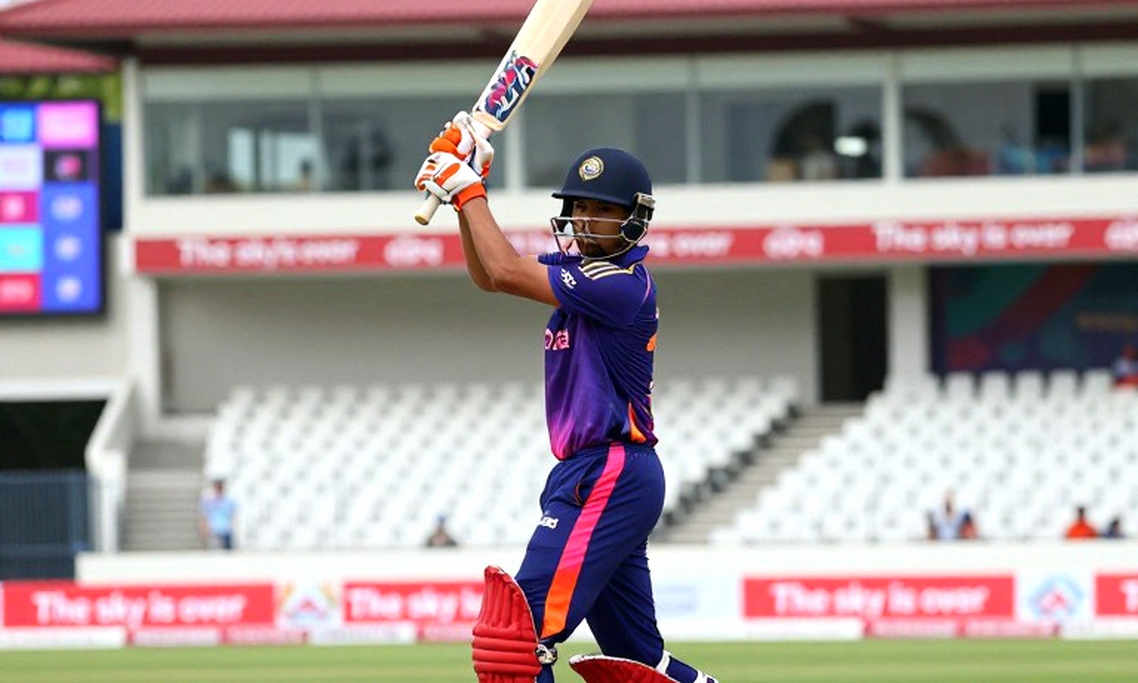
Three — selection displacement. The team won without her, so the spot is not guaranteed. Mitigation: domestic and franchise form.
Four, lower level — reduced league and brand visibility during the layoff. Unquantified in the source.
Five — public and media pressure to rush back before a marquee event. Level: medium. Mitigation: board-managed messaging.
Six, systemic — the congested multi-format women's calendar. This is the structural driver that converts a single tear into a longer absence.
Notably, there is no integrity exposure here: no match-fixing signal, no rules controversy, no DRS or DLS subplot. Governance risk is genuinely low.
Narrative: a comeback, or the intention of one?
The current narrative is the return of an injured young India batter — a redemption arc, still at the germination stage rather than a hype climax. There is no performance data to underwrite an 'impact return' story, so the narrative's fundamentals are weak-to-medium.
The expectation gap: market expectation that India keep winning is reasonable, because depth has proven itself. The implied expectation of a seamless personal return is mildly optimistic, because months out erodes sharpness. There is no auction or contract dimension in this report.
Source quality is a genuine reassurance. The origin is the ICC, an official body, which lowers rumour-driven distortion and keeps the framing restrained and objective.
There is also a quiet counter-narrative: India won without her. This is a return into competition, not a return to rescue. That distinction looks small but is decisive in calibrating fan and media expectations.
Industry transmission
The clearest transmission is a negative availability shock to the midstream — India Women and the Southern Brave/The Hundred ecosystem — partially offset downstream by the content value of a comeback narrative.
Segment by segment: broadcast media, neutral and small. The Indian market, slightly positive on comeback content. Talent supply chain, neutral and long-term. Franchise owners' capital network, slightly negative on asset-availability risk. Betting and fantasy, no signal in the source. Endorsement and content derivatives, mild upside.
No broadcast-rights, salary or betting data is present, so downstream financial magnitudes cannot be quantified from this source. Structurally, the important signal is that women's cricket's exposure to franchise-format injuries is rising, and as leagues expand, the pooled injury risk for national teams rises with them.
Signals to track
One — official return date or squad inclusion, via BCCI selection announcements. Trigger: a specific tournament named. Impact: confirms timeline and format.
Two — format of return, T20 or ODI, read from the first playing XI. Impact: indicates how tightly the hamstring is being load-managed.
Three — post-return output, especially strike rate and running speed. Trigger: sustained deviation from career baseline. Impact: tests whether the layoff eroded output.
Four — workload policy statements from women's leagues and boards. Trigger: new rest windows or caps. Impact: reshapes the industry's injury-risk model.
Five — verification of the reported missed events against ICC, ACC and OCA records. Trigger: confirmation of Asia Cup host and Asian Games details. Impact: resolves a factual anomaly in the source.
Glossary
The Hundred: England's 100-ball-per-side franchise competition; the injury occurred here.
High-grade tear: a severe muscle-strain classification involving substantial hamstring fibre damage, typically requiring prolonged rehabilitation.
BCCI: the Board of Control for Cricket in India, whose medical team diagnosed the injury.
Women's T20 Asia Cup: the Asian Cricket Council's women's T20 tournament.
Asian Games: a multi-sport continental event at which cricket was a medal sport; India won gold, per the report.
Southern Brave: Jemimah's franchise team in The Hundred.
Bottom line
This is a low-volume but physically significant item: a high-grade hamstring injury to a young India Women batter, sustained in an overseas franchise league, costing her a multi-event national window, while India demonstrated its depth by winning through her absence. The central sporting takeaway is return-readiness and recurrence risk, not any newly revealed performance data.
Keep three things in mind. Do not read a return announcement as full fitness. Treat the first few fixtures as a form-discovery window, not a verdict. And watch whether the recall is automatic or contested — the answer will say a great deal about both India's depth and the player's standing.